Counting Victories: Five Primate Conservation Breakthroughs That Gave Species a Second Chance
Conservation news cycles are often dominated by loss. Species disappear, forests shrink, and funding gaps widen faster than they can be filled. That narrative, while accurate in its broad strokes, can obscure the genuine progress that dedicated scientists, local communities, governments, and nonprofit organizations have achieved against formidable odds.
Over the past decade, several primate conservation efforts have produced measurable, documented recoveries that stand as proof of what sustained, science-informed action can accomplish. At the Iowa Primate Learning Center, we believe these successes deserve to be studied, celebrated, and used as templates for the challenges ahead. Below, we examine five of the most significant conservation wins for primates in recent years—and assess what remains at stake.
1. Mountain Gorillas: A Population Climbing Back from the Brink
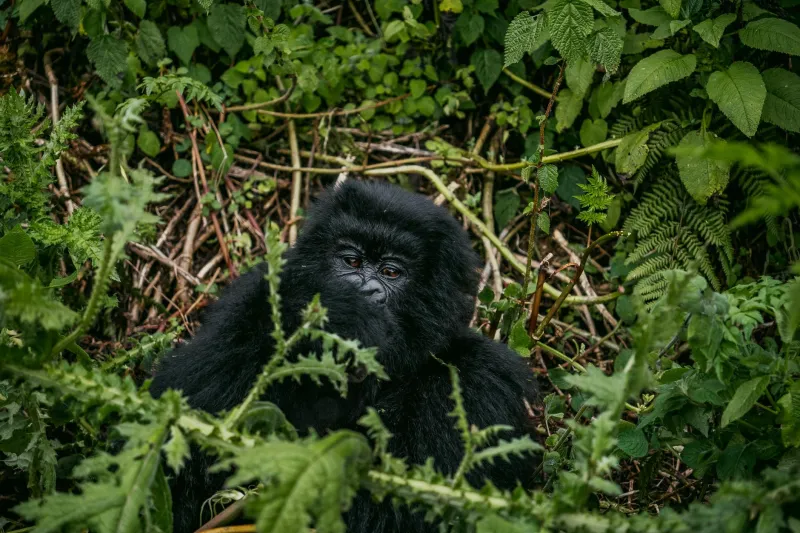
Perhaps no conservation story of the past decade has generated more warranted optimism than the continued recovery of the mountain gorilla (Gorilla beringei beringei). The most recent census data from the Virunga Massif and Bwindi Impenetrable Forest placed the global mountain gorilla population above 1,000 individuals—a threshold that led to their reclassification from "Critically Endangered" to "Endangered" on the IUCN Red List in 2018.
This recovery is the product of decades of coordinated effort across Rwanda, Uganda, and the Democratic Republic of Congo. Anti-poaching patrols, veterinary intervention programs that treat injured and snared gorillas, and gorilla tourism revenue that incentivizes local communities to protect rather than encroach upon habitat have all contributed to population growth.
The lesson here is integration. No single intervention achieved this outcome. It required political cooperation across national borders, community economic investment, and rigorous scientific monitoring working in concert. The mountain gorilla's recovery is not a conclusion—it is a fragile, ongoing process requiring continued vigilance—but it demonstrates that even critically depleted primate populations can rebound under the right conditions.
2. The Hainan Gibbon: Intensive Management of the World's Rarest Ape
The Hainan gibbon (Nomascus hainanus) holds the grim distinction of being the world's rarest ape, with a population confined to a single forest patch on China's Hainan Island. As recently as the 1950s, the species numbered in the thousands. Hunting and deforestation reduced that figure to fewer than ten individuals by the 1970s.
Over the past decade, intensive conservation management—including habitat restoration, the installation of artificial rope bridges to reconnect fragmented forest canopy, and strict protection of the remaining population—has allowed the Hainan gibbon to slowly increase. Recent surveys have documented the formation of new family groups, a sign that the population is not merely surviving but reproducing with sufficient success to expand.
While the species remains extraordinarily vulnerable—any disease outbreak, natural disaster, or enforcement failure could be catastrophic—the Hainan gibbon's trajectory represents a significant achievement in single-site conservation management and offers a model for other critically small primate populations.
3. Golden Lion Tamarins: A Reintroduction Blueprint for the Americas
The golden lion tamarin (Leontopithecus rosalia) of Brazil's Atlantic Forest has become one of the most-cited success stories in primate conservation, and the past decade has added new chapters to that narrative. Reintroduction programs initiated in the 1980s, which involved breeding animals in accredited zoos across the United States and Europe—including institutions with ties to North American primate research networks—and releasing them into restored forest habitat, have contributed to a wild population now estimated at more than 3,700 individuals.
Critically, the success of this program has depended on simultaneous investment in habitat restoration. Conservationists have worked with private landowners in the Atlantic Forest region to plant native tree corridors connecting isolated forest fragments, creating viable territories for released and wild-born tamarins alike.
For US audiences, this story carries particular resonance: American zoos have played a direct and documented role in preventing the extinction of a wild species. It is a concrete example of how captive breeding programs, when rigorously managed and paired with field conservation, can function as a genuine safety net for imperiled populations.
4. Community-Based Conservation in Madagascar: Protecting Lemurs From the Ground Up
Madagascar is home to more than 100 lemur species, all of them endemic to the island and the majority of them threatened. The past decade has seen the expansion of community-managed protected areas, known locally as aires protégées communautaires (APCs), which transfer conservation authority and economic benefit directly to local villages.
Research evaluating these programs has found that communities with formal land stewardship responsibilities demonstrate measurably lower rates of forest clearing and illegal lemur hunting than comparable areas without such structures. In regions where ecotourism revenue flows to local households, support for conservation is substantially higher.
This approach acknowledges a fundamental truth: long-term primate conservation cannot succeed without the active partnership of the people who live alongside the animals. Top-down enforcement models have repeatedly failed in contexts where local communities bear the economic costs of conservation without sharing in its benefits. Madagascar's community-based model, while imperfect and still evolving, offers a scalable framework applicable across primate range countries.
5. Legal Victories Against the Illegal Pet Trade
The illegal trade in primates as exotic pets represents one of the most persistent threats to wild populations, particularly for slow lorises, gibbons, and infant chimpanzees. Over the past decade, a combination of strengthened enforcement, international legal cooperation, and social media monitoring—used to identify and prosecute individuals advertising primates for sale online—has resulted in meaningful disruptions to trafficking networks in Southeast Asia and West Africa.
In Indonesia, coordinated enforcement operations have led to the confiscation of hundreds of slow lorises and the prosecution of traffickers operating through social media platforms. Advocacy organizations have successfully pressured major technology companies to implement policies restricting the advertisement of protected species, removing thousands of listings annually.
These are partial victories. The trade persists, and demand in certain markets remains high. But the legal infrastructure surrounding primate protection has strengthened, and the social stigma attached to exotic pet ownership has grown, particularly among younger, urban demographics.
What Remains at Risk—and What You Can Do
For every success listed above, a counterweight exists. Deforestation rates in primate-rich regions continue to outpace reforestation efforts. Climate change is altering forest composition in ways that affect primate food availability and disease exposure. Funding for long-term field research and conservation programs remains chronically insufficient.
US-based individuals and institutions can contribute meaningfully to primate conservation in several ways. Supporting accredited zoos that participate in Species Survival Plans directly funds both captive breeding and field conservation programs. Donating to established conservation organizations working in primate range countries—and researching their program effectiveness before giving—directs resources where they are most needed. Advocating for strong US enforcement of the Endangered Species Act and the Lacey Act, which prohibit the import of illegally taken wildlife, addresses the demand side of the illegal trade.
The victories described here were not inevitable. They were built by people who chose to act, sustained by institutions that chose to invest, and enabled by communities that chose to protect. The next decade of primate conservation will be shaped by similar choices—and the outcome is genuinely uncertain.