Cortisol, Cognition, and Captivity: What Stress Hormones Reveal About the Primate Mind
When a wild baboon watches a predator emerge from tall grass, its body responds with a rapid hormonal cascade that sharpens attention and mobilizes energy. That same physiological response, stretched across weeks or months of unrelenting social conflict, nutritional scarcity, or confinement in an inadequate enclosure, becomes something far more destructive. Chronic stress does not simply exhaust the body — it rewires the brain.
For primatologists and neuroscientists studying cognition across wild and captive populations, this distinction between acute and chronic stress sits at the heart of some of the most pressing questions in the field. Understanding precisely how prolonged hormonal dysregulation degrades learning, memory, and adaptive decision-making has become essential not only for advancing basic science, but for improving the lives of primates under human care and increasing the success of conservation breeding efforts worldwide.
The Biology of the Stress Response in Primates
The hypothalamic-pituitary-adrenal (HPA) axis governs the primate stress response. When an animal perceives a threat — physical, social, or environmental — the hypothalamus signals the pituitary gland, which in turn prompts the adrenal glands to release cortisol. In the short term, elevated cortisol enhances vigilance, improves immediate memory consolidation, and redirects metabolic resources toward survival functions.
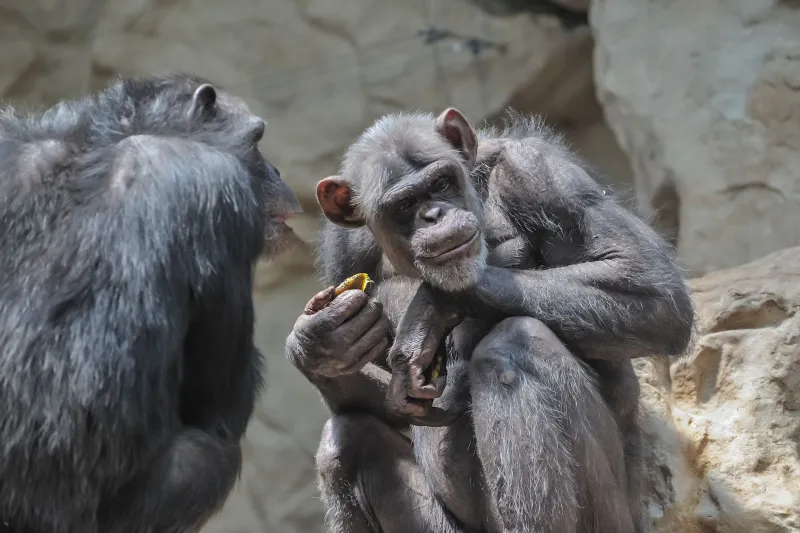
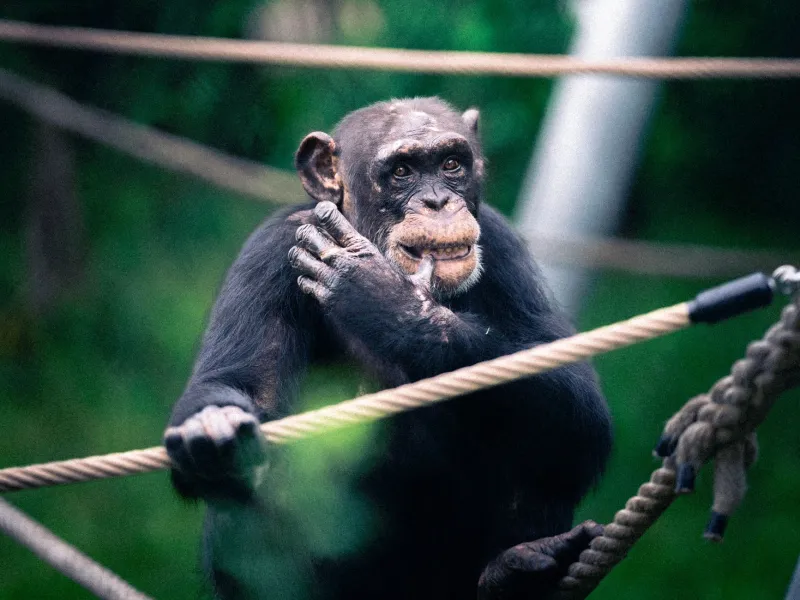
The problems begin when cortisol levels remain chronically elevated. Sustained exposure to glucocorticoids — the class of hormones that includes cortisol — has been shown to suppress neurogenesis in the hippocampus, the brain region most directly associated with spatial memory, contextual learning, and flexible decision-making. In macaques, long-term social subordination correlates with measurably reduced hippocampal volume. Similar structural changes have been documented in chimpanzees housed in environments with limited social enrichment.
This is not merely an abstract neurobiological concern. A primate with a compromised hippocampus is less capable of remembering the location of food sources, navigating social hierarchies effectively, or adjusting behavior in response to new information — all of which are critical competencies for both survival in the wild and successful reproduction in managed care settings.
Measuring What Cannot Be Directly Observed
One of the central methodological challenges in this area of research is the need to measure something as internal as cognitive function while simultaneously tracking hormonal states across diverse environments. Researchers have developed a suite of non-invasive techniques to accomplish this.
Fecal glucocorticoid metabolite (FGM) assays have become a cornerstone method for assessing chronic stress in wild populations without the confounding effect that capture itself would introduce. By analyzing hormone metabolites in collected fecal samples, scientists can construct longitudinal profiles of an individual animal's stress load across seasons, social upheavals, and habitat disturbances. In parallel, cognitive performance is assessed using touchscreen-based problem-solving tasks, reversal learning paradigms, and foraging efficiency studies conducted in both field and laboratory contexts.
Long-term datasets from field sites — including multi-decade baboon studies in Kenya and macaque research conducted at primate centers across the United States — have allowed researchers to correlate individual stress histories with specific cognitive outcomes. What they have found is both consistent and sobering: animals with chronically elevated cortisol profiles perform measurably worse on tasks requiring behavioral flexibility, inhibitory control, and associative learning.
Why Some Primates Adapt While Others Decline
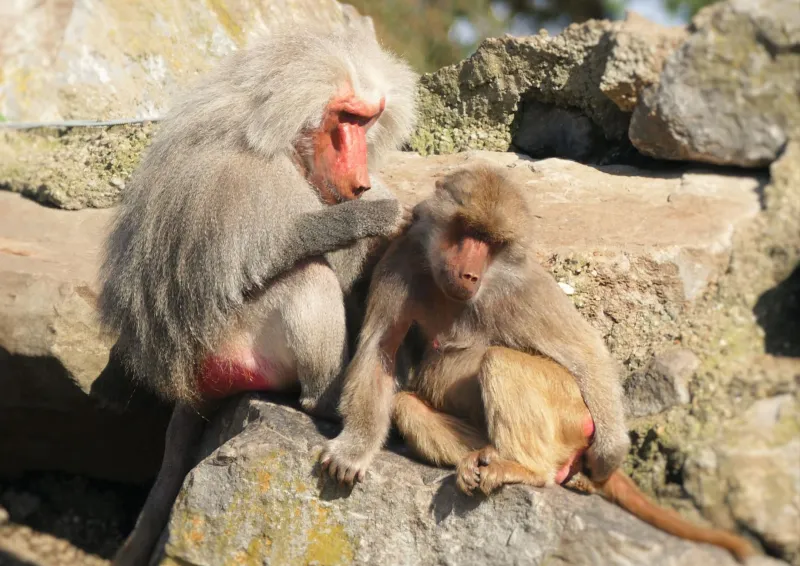
Not all primates respond identically to the same stressors, and this variability is itself a subject of active investigation. Social buffering — the demonstrated capacity of close social bonds to attenuate the HPA stress response — appears to be a powerful moderating factor. Female baboons with strong grooming relationships show lower FGM levels and better cognitive outcomes than socially isolated individuals facing equivalent environmental pressures.
Personality also plays a role. Individuals characterized by higher boldness scores in behavioral assessments tend to exhibit more adaptive responses to novel stressors, recovering cortisol levels more rapidly and demonstrating greater cognitive resilience. This intersection of temperament and neurobiological vulnerability has significant implications for how facilities evaluate animals being considered for breeding programs or reintroduction efforts.
In captive settings specifically, the design of the physical and social environment exerts enormous influence. Primates housed in species-appropriate group structures with adequate space, sensory complexity, and opportunities for foraging and play show cortisol profiles that more closely resemble those of stable wild populations. Those kept in impoverished conditions — regardless of nutritional adequacy — frequently exhibit the chronic stress signatures associated with cognitive decline.
Implications for Conservation Breeding and Research Standards
Conservation breeding programs managed by accredited institutions across the United States house hundreds of primate individuals representing endangered species, from cotton-top tamarins to Sumatran orangutans. The cognitive health of these animals is not incidental to conservation goals — it is central to them. Individuals that have experienced significant stress-induced cognitive impairment may struggle to acquire the foraging and social skills necessary for successful reintroduction, and females under chronic stress often show disrupted maternal behavior that affects the developmental trajectories of offspring.
The implications extend to research facilities as well. Institutions conducting cognitive studies on non-human primates have a methodological stake in minimizing chronic stress, since animals operating under elevated cortisol loads may yield data that reflects hormonal impairment rather than true species-typical cognitive capacity. This recognition has contributed to evolving welfare standards that emphasize psychological wellbeing alongside physical health.
The broader lesson emerging from this body of research is that primate cognition cannot be understood in isolation from the conditions under which it operates. A brain under chronic stress is not simply a stressed brain — it is a structurally and functionally altered one. As researchers continue to map the precise mechanisms by which cortisol disrupts neural architecture, the science increasingly supports what many in the field have long argued: that the quality of an animal's environment is inseparable from the quality of its mind.