Power, Kinship, and Survival: Inside the Social Architecture of Primate Groups
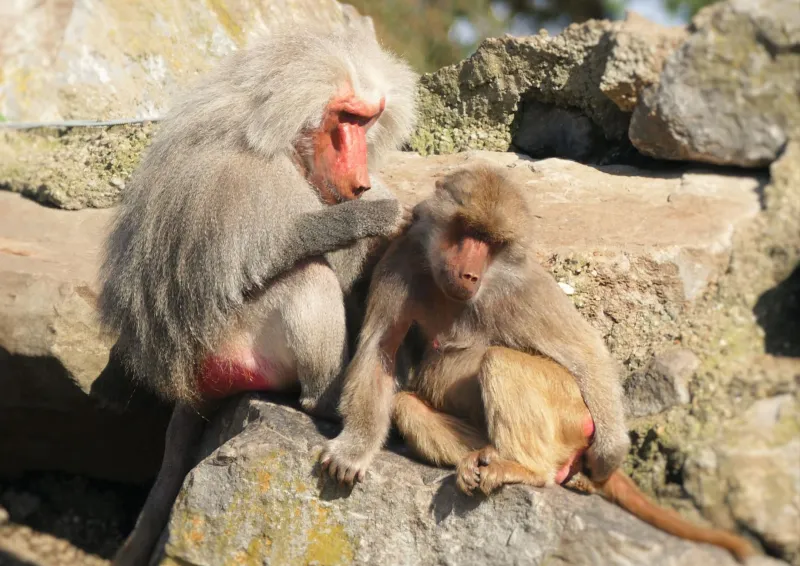
At first glance, a troop of baboons resting in the shade of an acacia tree might appear unremarkable—a loose assembly of animals engaged in grooming, foraging, and occasional squabbling. Look more carefully, and what becomes visible is something far more intricate: a social world governed by inherited rank, carefully cultivated alliances, and political maneuvering that can determine who eats first, who reproduces successfully, and who survives long enough to do either.
Primate social organization has been a central subject of behavioral research for more than half a century. What that research has revealed challenges simplistic narratives about dominance hierarchies as purely physical contests. The reality is considerably more nuanced—and considerably more interesting.
Rank Is Not Just About Strength
In many primate species, social rank is inherited rather than won. Among Japanese macaques (Macaca fuscata), females acquire rank positions close to those of their mothers, a pattern so consistent that researchers can predict a young female's eventual social standing before she has had any opportunity to assert herself. High-ranking females enjoy preferential access to food, grooming partners, and protection from aggression. Their offspring experience lower stress hormone levels, better early nutrition, and higher survival rates.
This inheritance of rank does not operate through genetics alone. It functions through social mechanism: high-ranking mothers intervene on behalf of their offspring in conflicts, other group members defer to infants whose mothers hold dominant positions, and the social landscape a young animal navigates is shaped from birth by its mother's standing. Rank, in this sense, is a social institution as much as a biological fact.
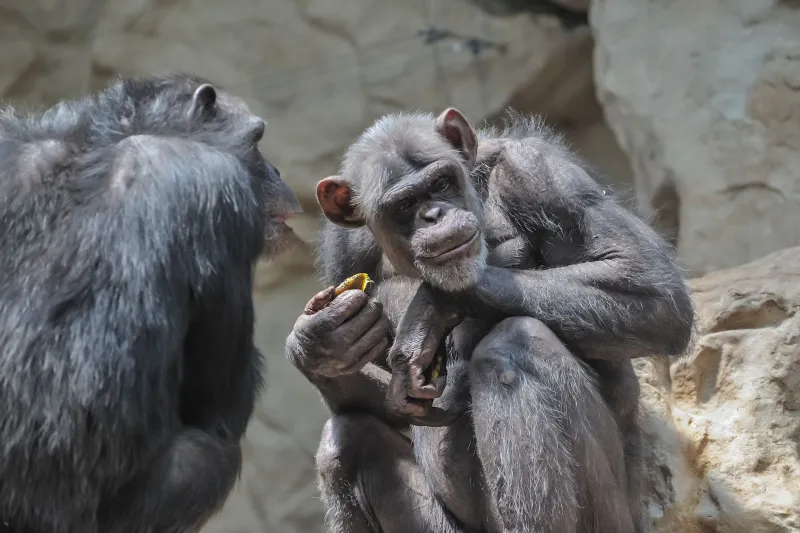
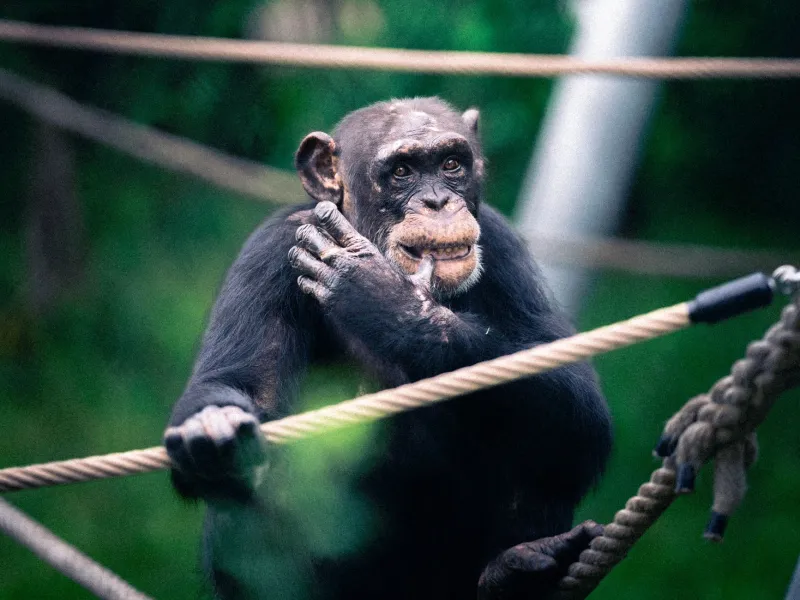
Male rank hierarchies operate differently. Among chimpanzees, males compete for alpha status through a combination of physical intimidation, coalition-building, and what researchers have described, without exaggeration, as political scheming. An alpha male who cannot maintain alliances will lose his position not necessarily to a physically stronger rival, but to a coalition of lower-ranking males whose combined leverage exceeds his own. Frans de Waal's foundational research at the Arnhem Zoo in the Netherlands documented this dynamic in striking detail, describing patterns of reconciliation, alliance negotiation, and strategic deception that have since been confirmed in wild populations across Africa.
Matriarchs and the Architecture of Elephant-Like Memory
In several primate species, older females serve functions that extend well beyond their individual reproductive output. Among elephants—not primates, but a useful comparative reference—matriarchs carry ecological knowledge that benefits entire groups. The same principle applies in primate societies.
Older female chimpanzees and gorillas accumulate decades of social knowledge: which individuals can be trusted, which alliances are stable, how group conflicts typically resolve. This accumulated experience appears to confer measurable benefits on the groups they anchor. Studies examining group cohesion during periods of social instability have found that groups with experienced, high-ranking matriarchs navigate transitions more successfully than those without.
For bonobos (Pan paniscus), female social power takes a different form. Unlike chimpanzees, bonobo females form strong lateral alliances with unrelated females, creating coalitions that collectively outrank even the largest males. This female-bonded social structure produces a society markedly less violent than that of chimpanzees, with conflict typically resolved through affiliative rather than aggressive behavior. The contrast between these two closely related species offers a natural experiment in how social structure shapes behavior—and vice versa.
When Cooperation Becomes Strategy
Alliance formation in primates is not incidental. It is calculated, tracked, and reciprocated with a precision that implies sophisticated social cognition.
Grooming, the most common affiliative behavior in primate societies, functions as a social currency. Individuals invest grooming time in partners who are most likely to provide support during conflicts, share food, or assist with infant care. Long-term studies of olive baboons (Papio anubis) in Kenya have demonstrated that females with strong, stable social bonds—measured by the consistency and reciprocity of their grooming relationships—live longer and raise more surviving offspring than females with weaker social networks. The survival benefits of friendship, it appears, are not uniquely human.
Cooperation can also take darker forms. Infanticide—the killing of infants by conspecifics—has been documented across multiple primate species and represents one of the most striking examples of how social competition operates at the level of reproductive strategy. In some cases, infanticide by incoming males shortens interbirth intervals and accelerates the killer's own reproductive opportunities. Females, in response, have evolved counter-strategies: forming protective coalitions, confusing paternity through promiscuous mating, and seeking proximity to males who may serve as protectors. The result is an evolutionary arms race played out in the social sphere.
Why This Matters Beyond the Field
Understanding primate social hierarchies is not merely an academic exercise. For conservation practitioners managing wild populations, knowledge of social structure is essential for predicting how groups will respond to disruption—whether from poaching, habitat loss, or translocation. The removal of a single high-ranking individual can destabilize a group in ways that reduce reproductive success and increase vulnerability to external threats for years afterward.
In captive settings, the stakes are equally concrete. Zoos and research facilities that house social primates must design group compositions with an understanding of rank, kinship, and alliance dynamics. Incompatible social configurations produce chronic stress, suppressed immune function, and reproductive failure. Conversely, well-structured social groups—those that approximate the relational complexity of wild populations—support psychological well-being and behavioral health in ways that isolated or poorly matched housing cannot.
The social lives of primates are not background noise to the main events of survival and reproduction. They are the mechanism through which survival and reproduction are achieved. Recognizing that complexity is the first step toward managing it responsibly.