Forests in Flux: How Climate Change Is Redrawing the Map for Primate Survival
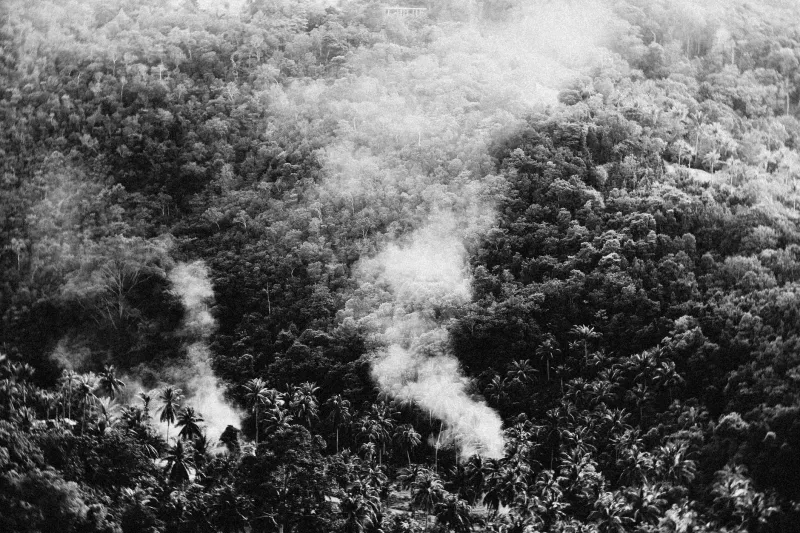
The forests that primates inhabit are not static. They have always changed—contracting during ice ages, expanding during warmer interglacials, shifting in composition as species track their preferred climatic conditions across centuries and millennia. What is different now is the pace. The rate of climate change currently underway has no precedent in the evolutionary history of most living primate species, and the landscapes they depend on are being transformed faster than biological adaptation can follow.
For the roughly 500 recognized primate species—more than 60 percent of which are already classified as threatened with extinction—climate change represents a compounding pressure layered on top of habitat destruction, hunting, and disease. The result is a conservation crisis that demands both scientific rigor and urgent action.
The Shrinking Range Problem
Climate modeling studies project that a substantial proportion of primate species will experience significant reductions in climatically suitable habitat over the coming decades, with tropical and subtropical forest species facing some of the most severe projected losses. In West and Central Africa—home to gorillas, chimpanzees, and hundreds of other primate species—rising temperatures and shifting precipitation patterns are altering forest composition in ways that affect the availability of the fruit, leaves, and insects these animals depend on.
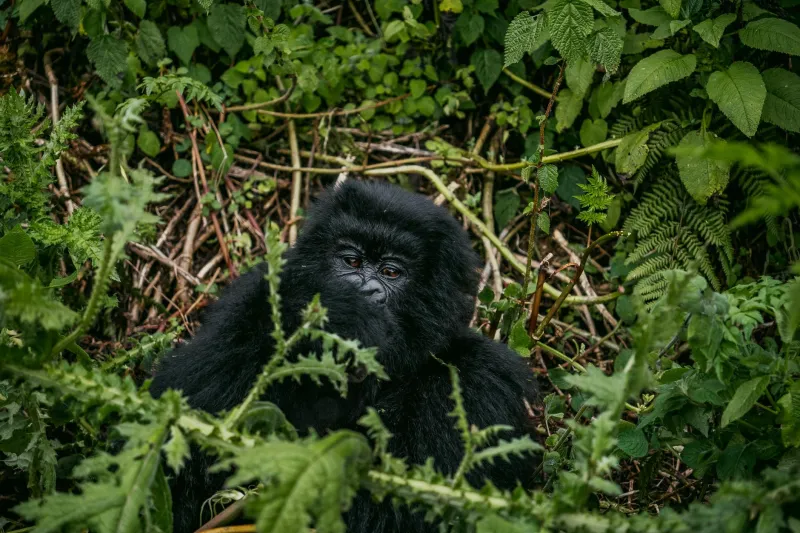
For mountain gorillas (Gorilla beringei beringei) in the Virunga Massif straddling Uganda, Rwanda, and the Democratic Republic of Congo, warming temperatures are pushing the vegetation zones they inhabit to higher elevations. As suitable habitat contracts toward mountain peaks, populations become increasingly isolated, reducing gene flow and increasing vulnerability to inbreeding and disease. The same dynamic is playing out for gelada baboons (Theropithecus gelada) in the Ethiopian Highlands, where montane grasslands are shifting upslope under the pressure of warming temperatures.
When Food Systems Fail
Beyond direct habitat loss, climate change is disrupting the phenological rhythms—the seasonal timing of flowering, fruiting, and insect emergence—that primate foraging strategies depend upon. Many tropical tree species flower and fruit in response to specific climatic cues, and as those cues shift, the predictable food calendars that primates have evolved to exploit become unreliable.
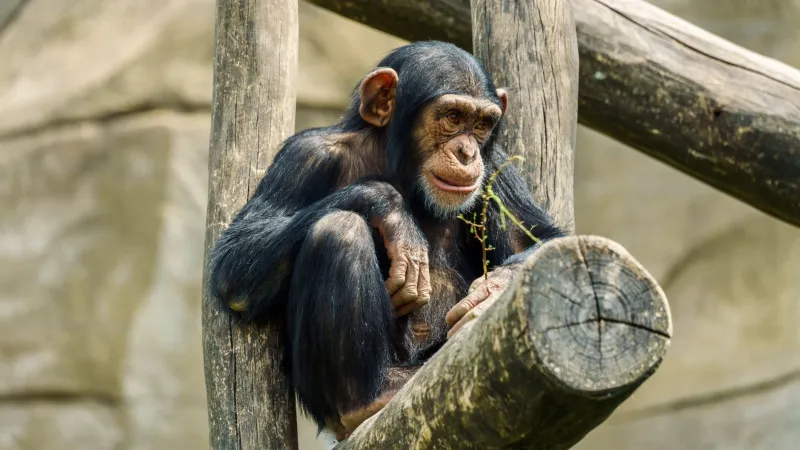
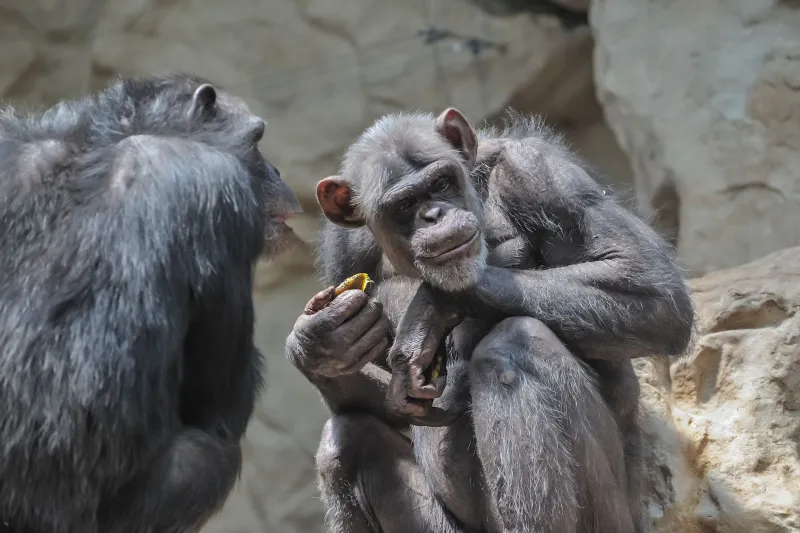
Long-term studies of chimpanzee populations in Uganda's Kibale National Park have documented periods of fruit scarcity associated with climate anomalies, during which groups expand their ranging areas, increase consumption of lower-quality fallback foods, and experience elevated rates of aggression and stress. These responses carry physiological costs: females in food-stressed periods show reduced reproductive rates, and infant mortality increases. What were once episodic fluctuations are becoming more frequent and more severe.
Spider monkeys (Ateles spp.) in Central and South America, which are among the most frugivorous of all primates, face particular vulnerability. Their dependence on ripe fruit and their low reproductive rates—females typically produce a single offspring every three to four years—mean that populations recover slowly from disruption. Modeling studies suggest that even moderate reductions in fruit availability, compounded by ongoing deforestation, could push several spider monkey species toward functional extinction in parts of their current range within decades.
Adaptation at the Edge: Species That Are Responding
Not all primate responses to climate-driven habitat change are passive. Researchers have documented behavioral flexibility in some species that may represent early signs of adaptive response—though whether such flexibility will prove sufficient is an open question.
In parts of West Africa, chimpanzee populations inhabiting savanna-woodland mosaic environments—habitats quite different from the closed-canopy forests typically associated with the species—have been observed developing behavioral repertoires suited to drier, more open conditions. These include expanded use of underground water sources, increased consumption of underground storage organs, and tool use adapted to the specific challenges of savanna foraging. Whether these populations represent a model for climate resilience or a remnant of a once-wider distribution is a matter of active research.
Macaques, which already occupy one of the broadest geographic and climatic ranges of any primate genus, offer a more optimistic case study in ecological flexibility. Japanese macaques survive winters in northern Honshu that no other non-human primate could tolerate, in part through behavioral thermoregulation strategies including the celebrated use of thermal hot springs. Rhesus macaques have colonized urban environments across South and Southeast Asia, exploiting human food sources and infrastructure with remarkable adaptability. The question for conservation is whether species with narrower ecological tolerances can be supported in developing equivalent flexibility—and what role human intervention should play in that process.
What Intervention Can and Cannot Do
Conservation responses to climate-driven habitat change are evolving rapidly. Assisted migration—the deliberate translocation of individuals or populations to climatically suitable habitat ahead of projected range shifts—is being discussed with increasing seriousness as a tool for species facing severe range contraction. Habitat corridor creation, which links fragmented forest patches and enables populations to track shifting climate zones under their own power, remains one of the most widely supported interventions, though its implementation requires sustained political will and cross-border cooperation that has proven difficult to secure.
In the United States, institutions including accredited zoos and primate research centers play a supporting role through ex situ conservation programs that maintain genetically managed populations of endangered species and contribute to coordinated breeding and reintroduction efforts. These programs are not a substitute for habitat protection, but they provide a demographic buffer against extinction for species whose wild populations have been reduced to critical levels.
Perhaps most importantly, the integration of climate projections into conservation planning is becoming standard practice. Protected area networks designed around current species distributions will become increasingly misaligned with future distributions as climate change progresses. Anticipatory planning—designing reserves and corridors that account for where species will need to be in 2050 or 2100, not just where they are today—is essential if protected areas are to remain functional refuges rather than ecological traps.
The forests are in flux. The primates that depend on them are adapting, migrating, and in some cases disappearing. The choices made by scientists, policymakers, and the public over the next two decades will determine which of those outcomes becomes the dominant story.