Every Primate Is an Individual: How Personality Research Is Changing Conservation
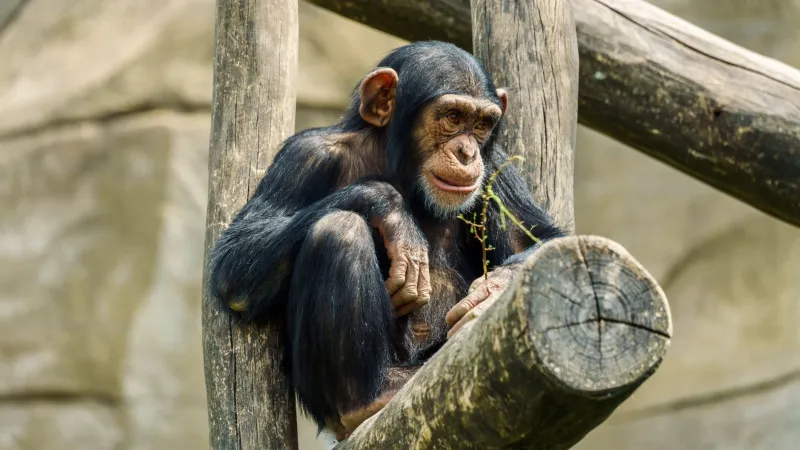
Anyone who has spent extended time observing primates in the field will tell you the same thing: the animals are not interchangeable. One chimpanzee is bold and exploratory; another from the same community is cautious and conflict-averse. A particular female baboon maintains unusually broad social networks, while her sister remains tightly bonded to a single ally. These differences are not noise in the data—they are signal.
For much of the twentieth century, primatology tended to treat such variation as secondary to species-level patterns. The goal was to characterize how chimpanzees behave, how macaques organize socially, how howler monkeys use their habitat. Individual quirks were averaged out in the pursuit of generalizable findings. That approach produced an enormous amount of valuable knowledge—but it also obscured something fundamental about how primate populations actually function.
Over the past two decades, a growing number of researchers have turned their attention to primate personality: the stable, consistent behavioral and emotional tendencies that distinguish one individual from another within the same species. What they are finding is transforming not only our understanding of primate cognition but also the practical strategies used to protect primates in both wild and captive settings.
Defining Personality in a Non-Human Context
The word "personality" carries a lot of cultural weight, and applying it to non-human animals requires some definitional care. In the scientific literature, animal personality—sometimes called behavioral individuality or animal temperament—refers to consistent individual differences in behavior that are stable across time and contexts. An animal that consistently approaches novel objects with curiosity across multiple independent observations is displaying a personality trait, not a momentary mood.
Researchers typically measure primate personality through one of two primary methods: structured behavioral coding by trained observers, or questionnaire-based ratings completed by caretakers and field researchers who know individual animals well. Both approaches have their strengths and limitations, and the field has invested considerable effort in validating these instruments against objective behavioral data.
The traits that emerge from this research map recognizably, though not perfectly, onto dimensions identified in human personality psychology. Dimensions such as sociability, boldness, curiosity, agreeableness, and emotional reactivity appear repeatedly across species—from chimpanzees and orangutans to capuchins, rhesus macaques, and spider monkeys. The consistency of these dimensions across distantly related primate species suggests they reflect something evolutionarily ancient and adaptive.
Why Personality Matters for Survival
The practical stakes of personality research became clearer as researchers began linking individual behavioral profiles to concrete survival outcomes. A landmark long-term study of rhesus macaques on Cayo Santiago—a small island off Puerto Rico that has served as a research site for decades—found that personality traits predicted social network position, stress hormone levels, and ultimately reproductive success. Bold, sociable individuals were not uniformly advantaged; in some environmental conditions, cautious animals fared better by avoiding conflict and conserving energy.
In wild chimpanzee populations, similar patterns have emerged. Curious, exploratory individuals are often the first to adopt novel food sources or tools, contributing disproportionately to cultural transmission within communities. But those same individuals may also take risks that increase their exposure to predators or human-wildlife conflict. Personality, in other words, is not straightforwardly good or bad—it interacts with environment in complex ways.
For conservation managers, this has significant implications. A population's resilience to habitat disruption, climate variability, or disease outbreak may depend in part on the distribution of personality types within it. A group composed entirely of risk-averse individuals may be slow to adapt to rapidly changing conditions. A group with no cautious individuals may suffer disproportionate losses in periods of heightened danger. Personality diversity, like genetic diversity, may function as a buffer against environmental uncertainty.
Personality Profiling in Captive Management
The application of personality research to captive primate management has produced some of the most immediately practical results. Zoos, sanctuaries, and research institutions across the United States now use individual behavioral profiles to inform decisions about housing, social groupings, enrichment programs, and reintroduction planning.
Consider the challenge of forming new social groups. Introducing primates to unfamiliar conspecifics is a notoriously delicate process, and incompatible pairings can result in serious injury or chronic stress. Facilities that have incorporated personality assessment into their introduction protocols report more stable group formations and fewer conflict-related injuries. Matching bold individuals with compatible social partners—rather than simply grouping animals by age, sex, and species—produces measurably better welfare outcomes.
Reintroduction programs present an even more striking case. When captive-born primates are released into wild or semi-wild environments, their survival depends heavily on behavioral flexibility and stress tolerance. Several programs working with golden lion tamarins in Brazil and black-and-white ruffed lemurs in Madagascar have begun incorporating personality assessments into their candidate selection processes. Animals that score high on boldness and low on anxiety-related reactivity tend to adapt more successfully to the challenges of life outside captivity—a finding that is reshaping how these programs select and prepare individuals for release.
Rethinking Conservation Strategy at the Population Level
Beyond individual management decisions, personality research is prompting a broader rethinking of how conservation strategies are designed and evaluated. Traditional population viability analyses focus primarily on demographic variables: birth rates, mortality rates, habitat area, and genetic diversity. These remain essential inputs. But they do not capture the behavioral dimension of population health.
Some researchers are now advocating for what might be called behavioral viability assessment—an accounting of whether a population retains the full range of personality types and behavioral strategies it needs to respond adaptively to future challenges. A population that has lost its boldest or most exploratory individuals through selective hunting or habitat fragmentation may be behaviorally impoverished in ways that standard metrics do not detect.
This perspective also changes how researchers think about human-wildlife conflict. Primates that come into contact with agricultural areas or human settlements are not a uniform group. Individual personality traits strongly predict which animals are most likely to engage in crop raiding, approach human settlements, or habituate to the presence of people. Identifying and understanding these individuals—rather than treating all members of a raiding group as equivalent—may allow for more targeted and humane conflict mitigation strategies.
The Individual at the Center
What personality research ultimately asks of primatology is a shift in perspective: from species as the primary unit of analysis to the individual as a meaningful subject of scientific attention. This is not merely a methodological adjustment. It reflects a deeper recognition that primate populations are not collections of identical behavioral algorithms but communities of distinct individuals with their own histories, tendencies, and relationships.
At the Iowa Primate Learning Center, this recognition informs our commitment to longitudinal, individual-centered research and education. Understanding primates as individuals does not diminish the value of species-level science—it enriches it. The more precisely we understand how individual variation shapes population dynamics and conservation outcomes, the better equipped we become to protect these animals in a world that continues to change around them.