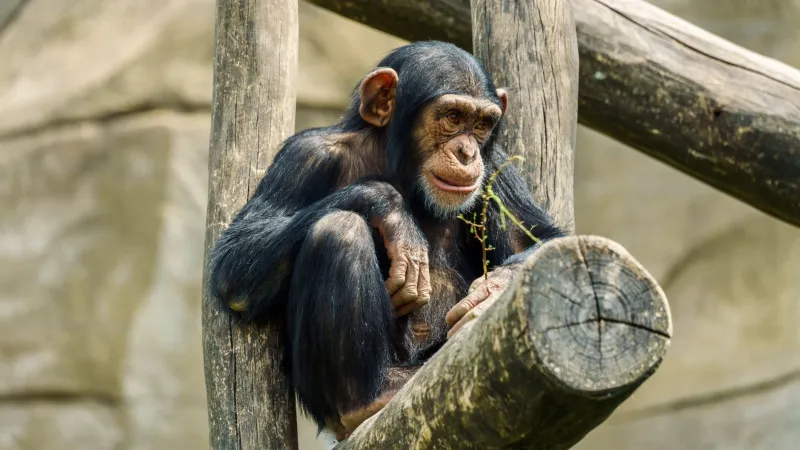
Transmission in the Canopy: When Human Pathogens Find Primate Hosts

The public conversation around zoonotic disease—illness that crosses the boundary between animal and human populations—tends to flow in one direction. We discuss the viruses and parasites that wildlife transmits to people, the spillover events that seed outbreaks, the ecological disruptions that bring humans into contact with novel pathogens. This framing is scientifically grounded and practically important. But it is incomplete.
The reverse phenomenon—human pathogens transmitting to wild animal populations—is less discussed and, in the context of primate conservation, potentially just as consequential. Because humans and non-human primates share a remarkable degree of biological similarity, including immune system architecture, cell surface receptors, and respiratory physiology, the pathogens that circulate in human communities can often establish themselves in primate hosts with troubling efficiency. The result is an underappreciated threat to some of the world's most endangered species.
A Vulnerability Born of Proximity
The same evolutionary closeness that makes primates valuable subjects for biomedical research also makes them susceptible to human disease. A respiratory virus that causes a mild upper respiratory infection in an adult human may produce severe pneumonia in a mountain gorilla. A gastrointestinal pathogen that a healthy person clears within a week can devastate the gut flora of a chimpanzee with no prior exposure.
This vulnerability is not theoretical. Documented cases of human-to-primate disease transmission span decades and continents. Respiratory viruses—including human metapneumovirus, respiratory syncytial virus, and various rhinovirus strains—have been detected in wild great ape populations in Central and East Africa, often coinciding with observed respiratory illness events that resulted in significant mortality. Genetic sequencing of viral isolates from deceased animals has, in several cases, traced the pathogen directly to human sources.
Parasitic transmission has been documented as well. Cryptosporidium and Giardia species associated with human fecal contamination have been found in primate populations living near agricultural communities, particularly where shared water sources exist. In some cases, the parasite strains recovered from primates are genetically identical to those circulating in nearby human communities—a molecular fingerprint of interspecies transmission.
The Tourism and Research Paradox
One of the more uncomfortable dimensions of this issue involves the very activities most closely associated with primate conservation: ecotourism and field research. Both bring humans into sustained, close-range contact with wild primates, and both have been linked to disease transmission events.
Mountain gorilla tourism in Uganda, Rwanda, and the Democratic Republic of Congo represents a conservation success story by many measures. Revenue from tourism has funded anti-poaching efforts, community development programs, and habitat protection. The gorilla population, once in precipitous decline, has increased substantially over the past two decades. But the same tourists who fund this conservation infrastructure also represent a potential disease vector.
Most gorilla trekking programs require visitors to maintain a minimum distance from the animals and to wear masks. These protocols are science-based and important. However, compliance is imperfect, enforcement is difficult in rugged terrain, and the minimum distance requirements were established before the emergence of SARS-CoV-2 and other pathogens with demonstrated cross-species transmission potential. The COVID-19 pandemic prompted urgent reassessments of biosecurity protocols at primate tourism sites worldwide, and many programs temporarily suspended operations—a decision that itself carried conservation costs, as tourism revenue dried up and communities that had depended on it faced economic pressure.
Field researchers face an analogous dilemma. Long-term behavioral studies require habituation—the gradual process of acclimating wild primates to human presence so that researchers can observe natural behavior without disturbing it. Habituated animals are, by definition, more comfortable with close human proximity, which may increase their exposure to human-origin pathogens. Some of the most scientifically valuable primate study populations in the world are also, as a consequence, among the most epidemiologically exposed.
Building Disease Surveillance Infrastructure
The response to these risks has involved the development of more sophisticated disease surveillance systems designed to detect pathogen spillover events early and track their progression through primate populations. This work sits at the intersection of veterinary medicine, epidemiology, conservation biology, and molecular genetics—a genuinely interdisciplinary challenge.
Fecal sampling is a cornerstone of non-invasive primate health monitoring. Because many pathogens—viral, bacterial, and parasitic—are shed in feces, systematic collection and analysis of samples from wild populations can provide early warning of emerging infections without requiring physical contact with the animals. Advances in environmental DNA analysis and portable sequencing technology have made it possible to conduct increasingly sophisticated pathogen screening in remote field settings, a development that has meaningfully expanded surveillance capacity in areas where laboratory infrastructure is limited.
Blood and respiratory sample collection from recently deceased animals, though logistically challenging, provides more definitive diagnostic information and has been critical in establishing the human origins of several primate disease events. Collaborative networks linking field veterinarians, national wildlife authorities, and international research institutions have improved the speed and quality of post-mortem investigations in several key primate range countries.
In the United States, organizations involved in primate research and conservation have increasingly engaged with the One Health framework—an integrated approach to human, animal, and environmental health that explicitly recognizes the interconnectedness of these domains. Federal agencies including the Centers for Disease Control and Prevention and the National Institutes of Health have supported One Health initiatives that include primate health surveillance components, reflecting a growing institutional recognition that protecting primate populations is not separable from managing the broader landscape of infectious disease.
What Spillover Events Reveal About Human-Wildlife Boundaries
Beyond their immediate epidemiological significance, human-to-primate disease transmission events carry a broader message about the state of human-wildlife boundaries in the twenty-first century. Those boundaries are eroding. Habitat fragmentation, agricultural expansion, extractive industry, and climate-driven range shifts are bringing humans and wild primates into contact in new places and at new frequencies. Each additional contact event is a potential transmission opportunity.
The pathogens that exploit these opportunities are not acting with intent—they are simply doing what pathogens do: finding susceptible hosts, replicating, and spreading. But the conditions that create susceptible host encounters are shaped by human decisions about land use, wildlife management, public health infrastructure, and conservation investment. In that sense, the trajectory of human-to-primate disease transmission is not fixed. It is a variable that policy and practice can influence.
For the scientific community, this means investing in surveillance systems capable of detecting spillover events before they become epidemics, developing biosecurity protocols that are both rigorous and practically implementable in field conditions, and communicating the risks clearly to the tourists, researchers, and local communities whose behavior shapes transmission dynamics on the ground.
For educators and institutions like the Iowa Primate Learning Center, it means helping broader audiences understand that primate conservation is not a contained, distant concern. The health of wild primate populations is connected to human health systems, land use decisions, and global disease dynamics in ways that are increasingly impossible to ignore. The canopy and the clinic are closer than they appear.