A Lifetime of Learning: How Primates Acquire, Preserve, and Pass On Knowledge From Birth to Old Age
American culture tends to treat learning as something that belongs primarily to the young. We build schools for children, design universities for young adults, and speak of the brain's plasticity as though it were a resource that inevitably runs dry. The study of primate cognition across the full arc of a lifespan offers a compelling counternarrative — one in which learning is not front-loaded into youth but instead shifts form, deepens in certain dimensions, and becomes socially indispensable as individuals age.
For researchers working across primatology, developmental psychology, and cognitive science, the question of how primates learn at different life stages has emerged as one of the field's most generative and practically relevant lines of inquiry. The answers have implications not only for understanding the evolutionary origins of human intelligence, but for designing better conservation programs, educational outreach, and captive care standards.
The Earliest Classroom: Infancy and Maternal Transmission
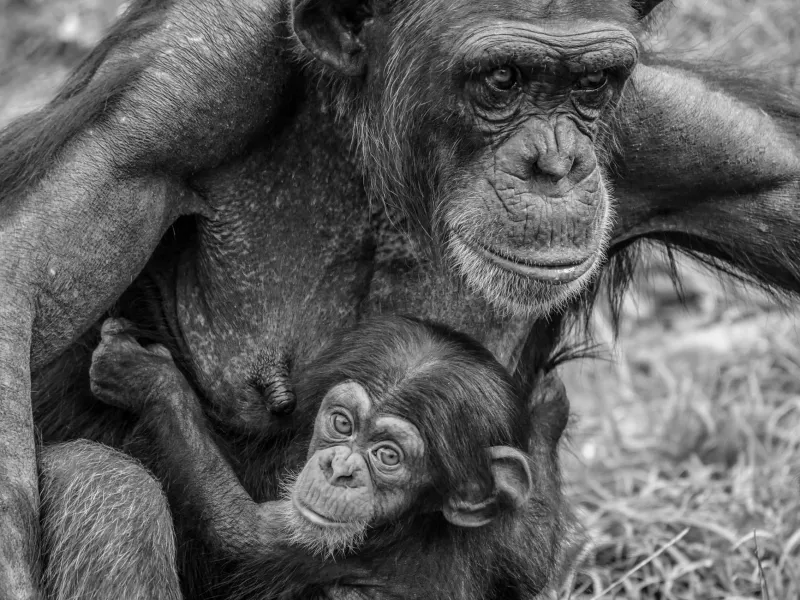
In most primate species, the mother is the first and most consequential teacher. From the earliest weeks of life, infant primates are not passive recipients of parental care — they are active observers, tracking maternal movements, attending to the foods she selects, and beginning the slow process of imitation that will form the backbone of their behavioral repertoire.
Studies of wild chimpanzees in West Africa have documented infant females spending significantly more time than their male counterparts watching and practicing nut-cracking behavior alongside their mothers, a pattern that predicts earlier competency acquisition. This sex-differentiated attention to maternal behavior suggests that social learning in infancy is not random but selectively directed — infants appear to recognize the relevance of what they are observing and allocate attention accordingly.
Mother-infant interaction also shapes cognitive architecture in ways that extend well beyond specific skill acquisition. The quality of early attachment bonds influences stress regulation, exploratory behavior, and the willingness to engage with novel problems — foundational capacities that affect learning trajectories across the entire lifespan. Disruption of these early relationships, whether through premature separation or maternal stress, leaves measurable cognitive signatures that researchers can detect years later.
Juvenile Learning: Social Experimentation and Peer Networks
As primates move through the juvenile period, peer relationships increasingly supplement maternal instruction. Play groups become informal learning environments in which young animals experiment with social rules, test the limits of their physical capabilities, and begin to develop the behavioral flexibility that will serve them in adult life.
This phase is characterized by what developmental researchers sometimes call "protected immaturity" — the extended period during which young primates are shielded from the full consequences of their errors by the tolerant presence of adults. In species with long developmental periods, such as orangutans and gorillas, this protection is prolonged, allowing juveniles to practice complex skills like tool use or food processing repeatedly before they must rely on those skills for survival.
Social network position during the juvenile period also matters. Young primates with access to multiple skilled individuals — not just their mothers — tend to acquire a broader behavioral repertoire. Research on Japanese macaques famously documented how a single innovative juvenile, Imo, introduced novel foraging behaviors that spread through her social network and eventually persisted across generations, illustrating how juvenile social connections can serve as vectors for cultural transmission.
Adulthood: Specialization, Refinement, and Social Role
The transition into adulthood does not mark the end of learning — it marks a shift in its character. Adult primates tend to show reduced generalist exploration and increased investment in refining domain-specific competencies. An adult male chimpanzee who has spent years learning the social geography of his community allocates cognitive resources differently than a juvenile sampling every available behavior.
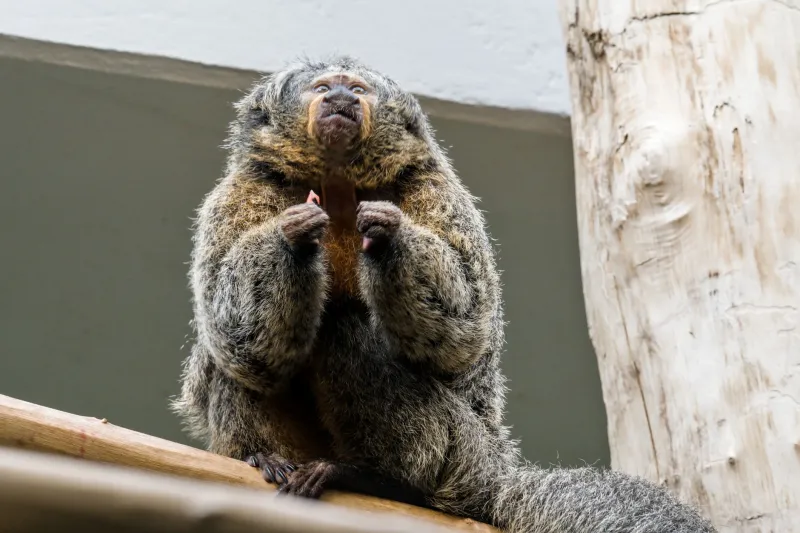
Adults also become teachers in ways that are more active than simple demonstration. Orangutan mothers have been observed modifying their behavior specifically in the presence of watching offspring, slowing their actions or repeating them in apparent response to infant attention. Among capuchin monkeys, tolerant adults allow juveniles to take food directly from their hands — a behavior researchers interpret as a form of facilitated learning rather than mere passive tolerance.
Adult learning is also shaped by ecological unpredictability. When habitat conditions shift — drought reduces preferred food sources, for example, or human encroachment alters movement patterns — adult primates must acquire new behavioral solutions. Long-term field studies suggest that individuals with more diverse early social learning experiences are better equipped to respond flexibly to these adult challenges, underscoring the cumulative nature of lifelong cognitive development.
The Elder Advantage: Experience as a Survival Resource
Perhaps the most underappreciated dimension of primate learning across the lifespan is the cognitive value of old age. In species with complex social structures and long memories, elderly individuals serve functions that cannot be replicated by younger, cognitively faster animals.
Research on African elephants — close parallels to primate social dynamics — demonstrated that herds led by older matriarchs showed superior responses to predator threats and greater knowledge of distant water sources during drought. Analogous findings are emerging from primate research. Older female baboons with extensive social networks appear to function as stabilizing forces within their groups, and their presence correlates with reduced group-level stress indicators in younger animals.
In chimpanzee communities, elderly individuals have been observed using tools in ways that are rarely seen among younger animals, suggesting that certain sophisticated techniques require decades of accumulated experience to develop fully. This "elder knowledge" represents a form of cultural capital that is lost permanently when old individuals die — a consideration with direct relevance to conservation programs that prioritize reproductive-age animals and may inadvertently undervalue the oldest members of a population.
Rethinking Intelligence as a Lifespan Phenomenon
The cumulative picture that emerges from lifespan learning research challenges reductive models of primate intelligence as a single, age-invariant capacity. Cognitive ability in primates is better understood as a shifting set of competencies — exploratory breadth in infancy, social flexibility in the juvenile period, domain expertise in adulthood, and ecological wisdom in old age — each of which contributes distinctively to individual survival and group-level resilience.
For conservation practitioners, this framework has practical consequences. Protecting primate populations requires preserving not just reproductive individuals, but the full demographic range that sustains intergenerational knowledge transfer. A population stripped of its eldest members is not merely smaller — it is cognitively impoverished in ways that may not become apparent until a novel challenge demands knowledge that no living individual possesses.