Neural Bridges: What Watching Primates Does to the Human Brain — and Why It Matters for Conservation
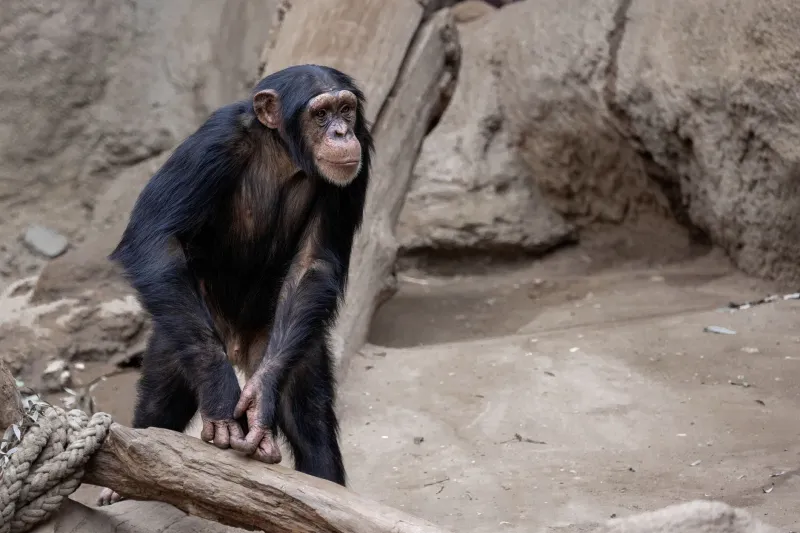
There is a particular moment that wildlife cinematographers frequently describe: the instant a chimpanzee on screen turns toward the camera, holds eye contact, and seems — however briefly — to look back. Viewers report a sensation difficult to articulate, something between recognition and unease. It turns out that sensation is not merely poetic. It has a neurological address.
Over the past two decades, researchers at the intersection of neuroscience and behavioral psychology have been mapping what happens inside a human brain when it witnesses primate emotion. The findings raise questions that extend well beyond the laboratory — into zoos, documentary streaming platforms, and the design of citizen science programs intended to cultivate conservation awareness.
Mirror Neurons and the Biology of Borrowed Feeling
In the early 1990s, a research team at the University of Parma made an accidental discovery while studying macaque monkeys: certain neurons fired not only when a monkey performed an action, but also when it observed the same action being performed by another individual. These cells, later termed mirror neurons, were subsequently identified in human neural tissue as well, concentrated in regions associated with motor planning, language, and social cognition.
The implications were significant. If the brain partially simulates observed actions and emotions rather than simply registering them as external data, then watching a primate grieve a lost companion or display exuberant play behavior is not a passive experience. The observer's neural circuitry, to some degree, participates.
Emotional contagion — the phenomenon by which one individual's affective state spreads to another — appears to operate through related mechanisms. Studies using functional magnetic resonance imaging have demonstrated that human subjects shown footage of primates in distress activate overlapping neural regions to those engaged when the subjects themselves experience discomfort. The overlap is imperfect, and the magnitude varies considerably across individuals, but it is consistent enough to be scientifically reproducible.
Dr. Frans de Waal, whose decades of research at Emory University examined primate empathy from the inside out, argued that human compassion is not a cultural invention layered over a cold biological substrate — it is itself a biological inheritance, one shared in modified form with our closest evolutionary relatives. Watching primates, in this framing, is not merely educational. It may be a form of self-recognition.
From Documentary Screen to Behavioral Shift
The more practically urgent question for conservation professionals is whether this neurological resonance translates into changed behavior. Emotional engagement is one thing; writing a check to a habitat preservation fund or adjusting consumer choices to reduce deforestation pressure is another.
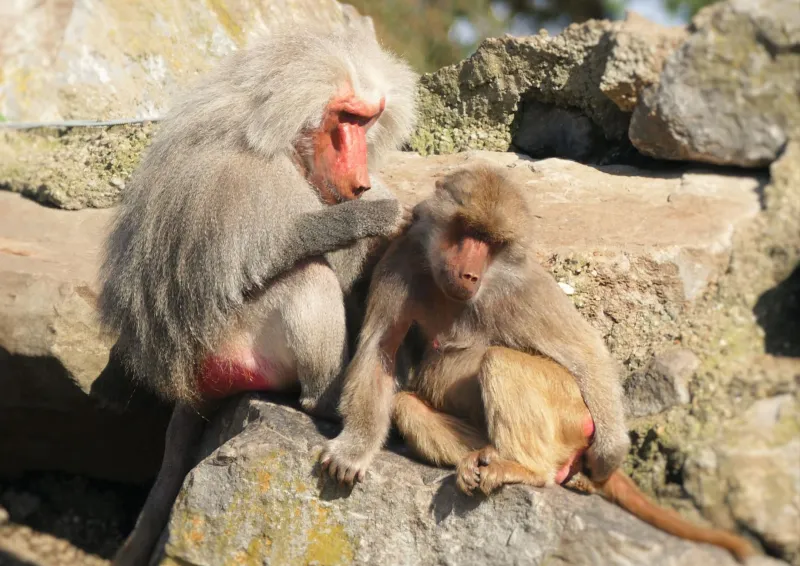
Research on this translation is mixed but encouraging in specific contexts. A 2018 study published in Biological Conservation found that zoo visitors who reported strong emotional responses to primate exhibits demonstrated measurably higher conservation knowledge scores and expressed greater willingness to support wildlife protection initiatives than visitors who reported neutral or low emotional engagement. Critically, the effect was stronger among visitors who had spent more time observing natural social behaviors — grooming, conflict resolution, play — rather than simply viewing animals in static environments.
Documentary exposure produces a parallel pattern. Surveys conducted following the release of high-profile nature films have consistently shown spikes in donations to featured species' conservation organizations, a phenomenon informally known in the nonprofit sector as the "David Attenborough effect." Neuroscientists suggest the mechanism involves not just mirror neuron activation but the sustained release of oxytocin — a neuropeptide associated with social bonding — during extended, emotionally engaged viewing.
Citizen science programs offer perhaps the most promising avenue, because they convert passive observation into active participation. Platforms that invite volunteers to analyze primate behavioral footage — classifying social interactions, identifying individuals, noting environmental stressors — appear to generate deeper attitudinal shifts than passive viewing alone. The act of attending carefully to another species seems to compound the empathic effect.
The Limits of Resonance
Scientific honesty requires acknowledging what mirror neuron research cannot yet claim. The existence of these cells in humans remains somewhat contested in its specifics; direct single-neuron recording in living human subjects is ethically impractical, and much of the evidence is inferred from neuroimaging data. Some researchers argue the "mirror neuron system" is a broader, distributed network rather than a discrete class of specialized cells.
Furthermore, emotional resonance does not automatically produce pro-conservation outcomes. Psychological distance — the sense that endangered species inhabit remote landscapes with no connection to American daily life — can blunt the behavioral consequences of even genuine empathy. And there is a well-documented phenomenon sometimes called "compassion fatigue," in which repeated exposure to distressing wildlife imagery produces emotional numbing rather than engagement.
Design matters enormously. Conservation communicators who understand the neuroscience are increasingly attentive to narrative structure, pacing, and the strategic use of individual animal protagonists rather than abstract population statistics. The human brain responds more powerfully to a named chimpanzee with a documented social history than to a graph showing species decline.
What Facilities and Educators Can Do
For institutions committed to both primate welfare and public education — zoos, research centers, and university programs among them — this body of research carries practical implications.
Exhibit design that prioritizes the expression of natural social complexity over novelty or spectacle gives visitors more to neurologically engage with. Interpretive programming that names individual animals, explains their relationships, and narrates their histories provides the narrative scaffolding that amplifies emotional connection. Digital extensions — live webcam feeds, behavioral annotation projects, social media accounts narrated from an individual animal's perspective — extend the engagement window beyond a single visit.
At the same time, responsible communication means resisting the temptation to exploit distress for emotional impact. Footage of traumatized or isolated animals may generate immediate sympathy, but research suggests it can also produce feelings of helplessness that suppress rather than motivate action. Showing primates thriving within complex social groups, demonstrating intelligence, forming relationships, and navigating environmental challenges tends to produce more durable attitudinal change.
A Relationship Worth Cultivating
The science of cross-species empathy is still developing, but its core finding is durable: the human brain is not indifferent to primate experience. That is not sentiment — it is neurology. The question facing conservation educators, zoo professionals, and behavioral researchers is how to channel a biological predisposition into informed, sustained, and effective advocacy.
The answer likely lies not in a single documentary moment or zoo visit, but in the accumulation of careful, repeated, and meaningful attention to the lives of our closest relatives. In that sense, the empathy experiment is less a laboratory procedure than a long-term educational commitment — one that institutions like this center are positioned to support.