More Than Games: The Developmental Science Behind Primate Play and What It Means for Conservation
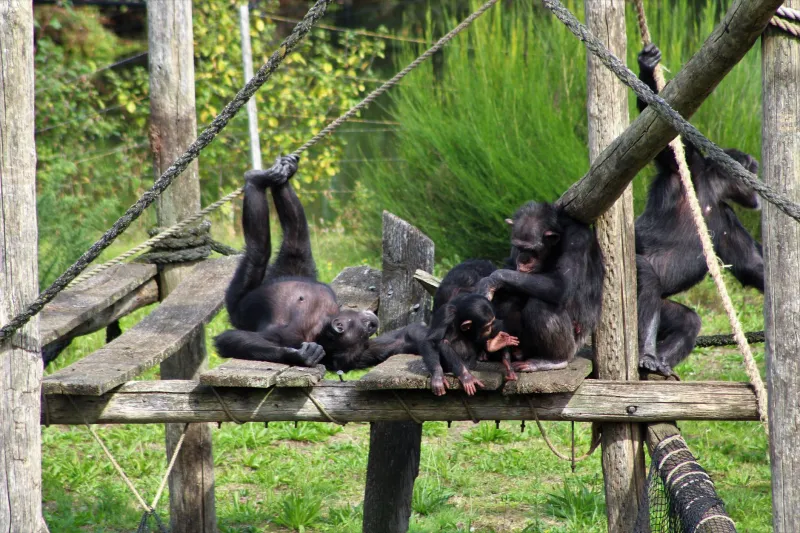
To a casual observer, two juvenile chimpanzees tumbling across a forest floor might appear to be doing very little of consequence. The wrestling, the chasing, the exaggerated facial expressions exchanged between play partners — it looks, in the most literal sense, like play. But beneath the apparent frivolity lies one of the most consequential developmental processes in primate biology, one that researchers are only now beginning to characterize with the rigor it deserves.
Play behavior in primates is energetically expensive, time-consuming, and — crucially — universal across the order. Every species studied to date engages in some form of play during development. That universality is itself a scientific signal. In evolutionary terms, behaviors that persist at significant metabolic cost do so because they confer survival advantages substantial enough to outweigh those costs. The question researchers have spent decades trying to answer is precisely what those advantages are, and why their absence in captive or disrupted environments produces animals that struggle in ways that are difficult to reverse.
Defining Play: A Harder Problem Than It Appears
One reason the science of primate play has developed unevenly is that play itself resists easy definition. Researchers generally identify play by several overlapping characteristics: it is voluntary and intrinsically motivated; it is performed in a relaxed, safe context; it exaggerates or recombines behaviors seen in other functional contexts; and it involves a degree of role reciprocity between participants.
This last criterion — reciprocity — is particularly important. Primate play is not simply one animal acting upon another. It is a negotiated, dynamic interaction governed by implicit rules that both parties must continuously monitor and respect. A larger juvenile who plays too roughly will find that partners withdraw; an animal that fails to signal playful intent through open-mouth play faces will be met with genuine aggression. The management of these micro-negotiations is itself a sophisticated cognitive task, one that exercises precisely the social and emotional regulation skills that adult primates require.
Researchers distinguish among several functional categories of play: locomotor-rotational play (running, jumping, climbing in non-functional contexts), object play (manipulating items in exploratory ways), and social play (interactions with conspecifics, including play-fighting, chasing, and grooming games). Each type appears to serve somewhat distinct developmental functions, though they frequently overlap in practice.
What Play Actually Builds
The developmental functions of play in primates span neurological, social, and physical domains — and evidence for each has strengthened considerably over the past two decades.
At the neurological level, play behavior during sensitive developmental windows promotes synaptic pruning and the maturation of prefrontal cortical circuits associated with inhibitory control and flexible decision-making. Studies in rodents established this connection with considerable precision, and subsequent work in non-human primates has supported the broader principle. Juvenile rhesus macaques deprived of normal play opportunities during early development show measurably altered stress responses and reduced behavioral flexibility in adulthood — deficits that persist even when social contact is later restored.
Socially, play provides the rehearsal ground for adult competencies that cannot be adequately learned any other way. Dominance hierarchies, coalition formation, conflict resolution, and sexual behavior all have their early iterations in the play interactions of juveniles. Young primates that engage in more frequent and varied play tend to show better social integration as adults, are more likely to form stable alliances, and demonstrate greater resilience when group composition changes.
Physically, locomotor play builds the proprioceptive maps and motor coordination that arboreal species require for safe movement through complex three-dimensional environments. A juvenile orangutan that has spent thousands of hours in play-based climbing and swinging has developed not just strength, but the neural representations of its own body in space that will prevent fatal falls in adulthood.
When Play Is Disrupted: Lessons From Captivity
The consequences of play deprivation are most legible in captive settings, where environmental constraints frequently limit the type, quality, and quantity of play available to developing primates. Enclosures that are too small for sustained locomotor play, social groups that are too restricted for varied partner selection, and management practices that separate juveniles from age-appropriate peers all compromise the developmental functions that play serves.
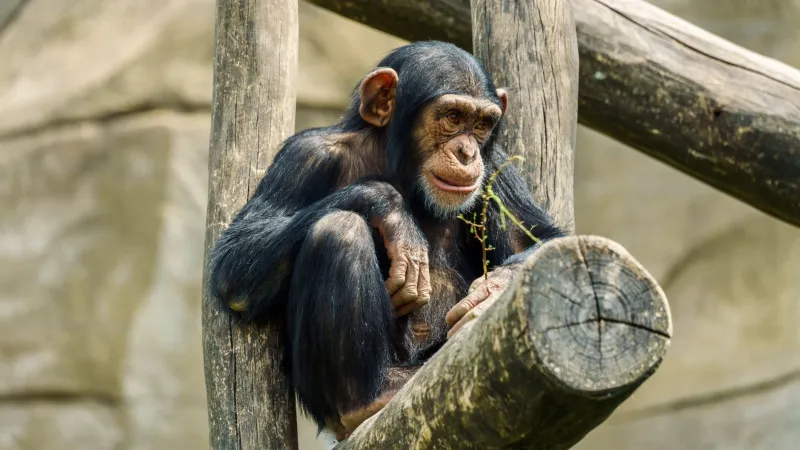
The resulting deficits are not subtle. Chimpanzees raised in impoverished early environments — particularly those who spent their earliest years in laboratory settings designed for biomedical research before welfare standards improved — have been documented to show stereotypic behaviors, heightened anxiety, and persistent difficulties with social integration that make successful placement in sanctuary group settings extremely challenging. The animals are not simply behaviorally unusual; they are cognitively and socially limited in ways that reflect genuine developmental gaps.
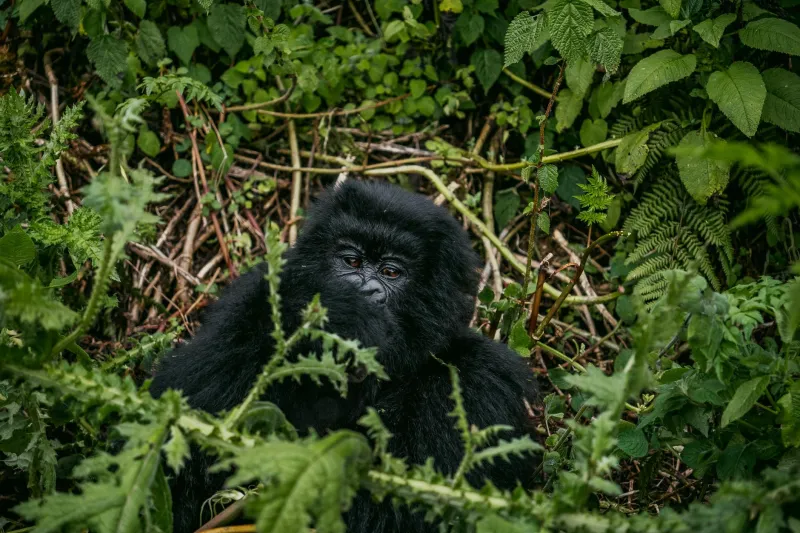
This has direct implications for conservation breeding programs. Facilities managing endangered primate species for potential reintroduction must contend with the reality that an animal raised without adequate play opportunities may lack the behavioral flexibility and social competence necessary to survive in wild or semi-wild conditions, regardless of its genetic suitability. A gorilla born into a well-managed breeding program that nevertheless lacks sufficient juvenile peer contact may be reproductively valuable on paper while being functionally unprepared for the social complexities of a reintroduction cohort.
Redesigning Environments Around Developmental Needs
The practical response to this body of evidence has been a gradual but meaningful shift in how leading zoological institutions and primate sanctuaries in the United States approach environmental design and social management. Organizations accredited by the Association of Zoos and Aquariums have incorporated play-supportive criteria into their animal care standards, and researchers working at the interface of welfare science and conservation biology have developed assessment tools for evaluating play quality in managed populations.
Effective interventions include ensuring that juveniles have consistent access to same-age or near-age peers, providing structurally complex environments that support locomotor play, and designing management schedules that protect unstructured social time rather than filling every period with keeper-directed activity. In some facilities, naturalistic foraging enrichment has been redesigned specifically to create contexts that elicit exploratory object play, recognizing that the cognitive engagement generated by play is as important as any specific skill the animal might acquire.
Play as a Conservation Indicator
Beyond its direct developmental functions, play behavior has emerged as a sensitive indicator of population and individual welfare in both wild and managed contexts. Field researchers have noted that play frequency in wild juvenile primates declines during periods of food stress, social instability, and habitat degradation — making play rate a potential proxy measure for assessing the overall condition of a population.
This insight is not merely academic. Conservation managers working with fragmented wild populations or managing animals in transitional settings — such as primates being prepared for soft-release reintroduction — can use observed play behavior as a real-time welfare signal, one that may reveal developmental concerns before more conventional health metrics register any alarm.
The science of primate play is, in this sense, both fundamental and applied. It illuminates something essential about how intelligence develops and how social capacity is built from the ground up. And it reminds those working in conservation and captive care that providing for an animal's physical needs, while necessary, is never sufficient. The mind, too, must be given room to grow.