Alone in the Enclosure: Why Social Isolation Remains Captive Primates' Most Persistent Crisis
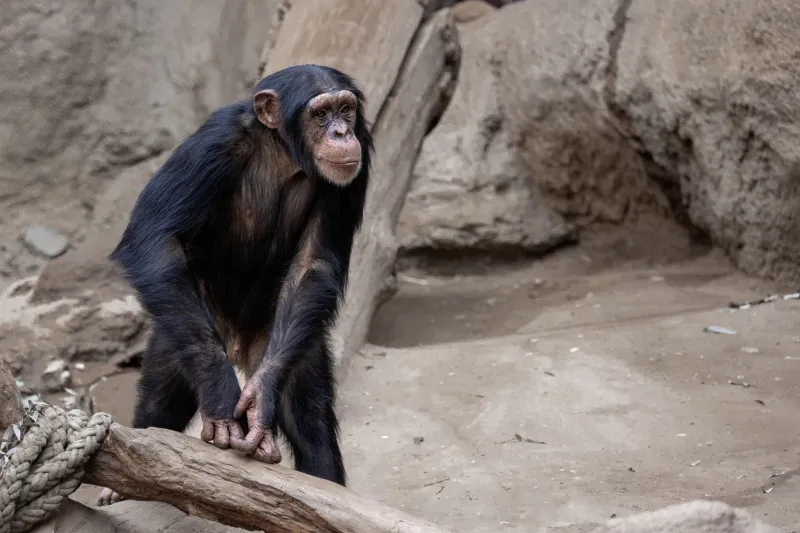
Consider the paradox at the center of modern primate captivity: an animal housed in a climate-controlled facility, receiving a nutritionally calibrated diet, regular veterinary monitoring, and a rotating schedule of cognitive enrichment activities — and yet exhibiting stereotypic behaviors, self-directed aggression, and hormonal profiles consistent with chronic stress. The food bowl is full. The enclosure is stimulating. The animal is, by measurable psychological indicators, suffering.
This is not a hypothetical scenario. It is a documented pattern across facilities ranging from underfunded roadside attractions to some of the most prestigious zoological institutions in the United States. And it is forcing a difficult reckoning within the primate care community about what "adequate care" actually means for species whose psychological architecture evolved around dense, dynamic, lifelong social embeddedness.
The Social Brain in a Solitary Setting
Primates are not merely social animals in the way that many vertebrates are social — opportunistically, seasonally, or instrumentally. For the great apes and many Old World monkey species, sociality is the organizing principle of cognition itself. The primate neocortex, disproportionately large relative to body size compared to other mammals, appears to have expanded primarily in response to the computational demands of navigating complex social relationships: tracking alliances, reading intentions, managing status, and maintaining reciprocal bonds across time.
Robin Dunbar's social brain hypothesis, developed through comparative neuroanatomy and behavioral ecology, posits that primate group size correlates with neocortex volume precisely because larger, more complex groups require greater social processing capacity. In chimpanzees, this means communities of up to 150 individuals with intricate dominance hierarchies, coalition politics, and culturally transmitted behavioral norms. In baboons, it means elaborate female kinship networks that structure access to resources across generations.
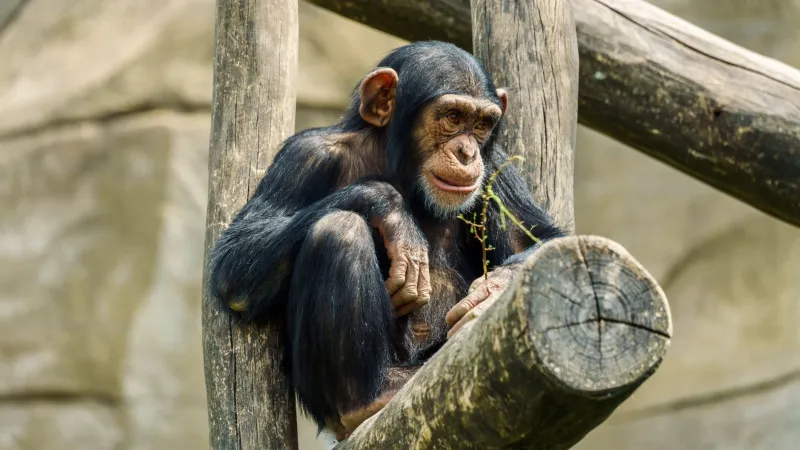
When an animal whose brain was shaped by this degree of social complexity is placed in an enclosure with one companion — or, in cases that still occur despite professional guidelines, none — the mismatch is not merely an inconvenience. It is a fundamental deprivation of the environmental conditions the animal's nervous system requires to function normally.
What the Behavioral Record Shows
The clinical literature on captive primate psychological distress is extensive and, in places, deeply uncomfortable reading. Stereotypies — repetitive, apparently purposeless behaviors such as rocking, pacing, and self-clasping — are widely recognized as indicators of compromised welfare. They are also remarkably common. A 2011 review published in Applied Animal Behaviour Science found stereotypic behavior in a significant proportion of captive chimpanzees across multiple facility types, with prevalence inversely correlated with the complexity and stability of social housing.
More striking are the parallels to human psychopathology. Captive primates subjected to early social deprivation or chronic isolation exhibit behavioral syndromes that closely resemble human depression, anxiety disorders, and post-traumatic stress responses. They show anhedonia — diminished response to stimuli that would ordinarily be rewarding. They demonstrate hypervigilance and exaggerated startle responses. Some engage in self-injurious behavior. Cortisol profiles in isolated individuals frequently remain chronically elevated, a physiological signature of sustained psychological distress.
Case documentation from US facilities is instructive. Chimpanzees retired from biomedical research programs — animals that spent years in individual housing with minimal social contact — have required years of careful, graduated social reintroduction before achieving anything resembling stable group membership. Some never fully recover the social competencies that group-reared individuals develop naturally in early life. The damage, in other words, can be lasting.
The Enrichment Illusion
It would be unfair to suggest that the zoological and research communities have ignored these problems. The past three decades have seen substantial investment in environmental enrichment: puzzle feeders, sensory novelty, expanded enclosure complexity, and training programs designed to provide cognitive engagement and a degree of behavioral agency. These interventions are not without value. They demonstrably reduce certain stereotypies and improve some welfare indicators.
But there is a growing body of opinion within animal behavior science that enrichment, as typically practiced, addresses symptoms without resolving the underlying deficit. A foraging puzzle engages a chimpanzee's problem-solving capacity; it does not provide grooming reciprocity, coalition support, or the experience of navigating a social hierarchy. A novel object stimulates curiosity; it does not replicate the communicative richness of living within a group whose members know each other individually and respond dynamically to each other's emotional states.
Critics within the field — including some who work inside accredited institutions — argue that enrichment has at times functioned as a reputational buffer, allowing facilities to demonstrate visible investment in animal welfare while deferring the harder and more expensive work of genuinely improving social housing. The Association of Zoos and Aquariums' accreditation standards require social housing for gregarious species, but the interpretation of those standards varies, and enforcement mechanisms are limited.
What Better Looks Like
Some facilities are doing things differently, and their approaches offer a template worth examining.
The Chimpanzee Sanctuary Northwest in Cle Elum, Washington, has built its entire program around the premise that chimpanzees require not just companionship but chosen companionship — the ability to affiliate selectively, withdraw when desired, and develop relationships at their own pace. Their introductions are slow, carefully monitored, and responsive to individual animal signals. The goal is not a managed group but something approaching a genuine social community.
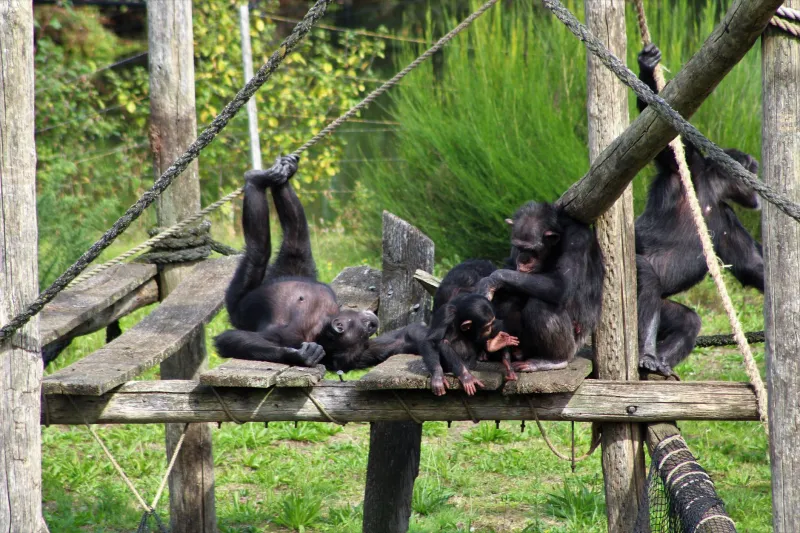
Several leading zoos have expanded to multi-acre naturalistic habitats that accommodate larger social groups and allow for the kind of spatial complexity that permits animals to manage their own social exposure — seeking interaction when motivated and retreating when not. The behavioral changes documented in animals moved from conventional enclosures to these settings are frequently dramatic.
Research institutions operating under USDA oversight have faced perhaps the sharpest scrutiny, particularly following the National Institutes of Health's 2015 decision to end support for most chimpanzee research. The retirement of former research animals to sanctuary settings has created both a welfare obligation and a research opportunity: longitudinal observation of recovery trajectories in previously isolated individuals is generating new data on primate resilience and the conditions that support it.
A Standard Worth Raising
The argument here is not that captive primate facilities are indifferent to animal welfare — the evidence largely contradicts that characterization. It is that the standard of care the field has converged on may be insufficiently ambitious given what behavioral science now tells us about primate social needs.
Funding is a genuine constraint. Authentic social housing at appropriate scale is expensive to design, build, and manage. The political and logistical complexity of maintaining stable primate groups — managing introductions, monitoring conflict, responding to injuries, supporting vulnerable individuals — is substantial. These are real obstacles, not excuses.
But they are obstacles that the field has a professional and ethical obligation to confront directly. For institutions whose public mission includes advancing primate welfare alongside research and education, the question of whether current practices meet the standard that current science demands is not rhetorical. It is the question that should be driving the next generation of facility design, accreditation standards, and funding priorities.